
· by Michael Blair, Nashville's Crawl Space Repair
Sealing a crawl space stops most of the outdoor humidity getting in, but not all of it, and the house above still breathes into it. A dehumidifier removes what remains, and in Middle Tennessee it runs most of the year. Because it lives in the dark and nobody looks at it, the common failures are simple ones: a full bucket, a blocked drain, a unit placed where it cannot circulate air, or a household model that gave up after two summers.
The target number
The aim is relative humidity below about sixty percent, which is the level above which mold grows on wood and joists take on moisture. Fifty to fifty-five percent is a comfortable target that leaves margin. Below that, the unit runs more than it needs to for no benefit.
Place a hygrometer at the far end of the crawl space from the unit, not beside it, because the reading beside the discharge is always dry. A remote sensor that can be read from the house is worth having; the alternative is nobody knowing the unit has stopped until the floor above starts to smell.
Draining, which is where they fail
A crawl space unit collects water continuously in summer and it has to go somewhere without a person emptying a bucket. Gravity drain to a floor drain or a sump is best. Where the crawl space is lower than any drain, a condensate pump lifts it to a drain line or outside, and that pump needs a float switch that stops the dehumidifier if the pump fails.
Discharging to the outside through the foundation wall is fine as long as the outlet is below the unit or pumped, is protected from freezing, and does not simply dump water at the foundation to soak back in. A drain line that runs uphill, kinks, or terminates in the crawl space gravel is the most common thing found when a unit has flooded its own floor.
- Gravity drain to a sump or floor drain where possible
- Otherwise a condensate pump with a safety float
- Drain line falls continuously, no traps or kinks
- Outlet clear of the foundation and protected from frost
Placement and air movement
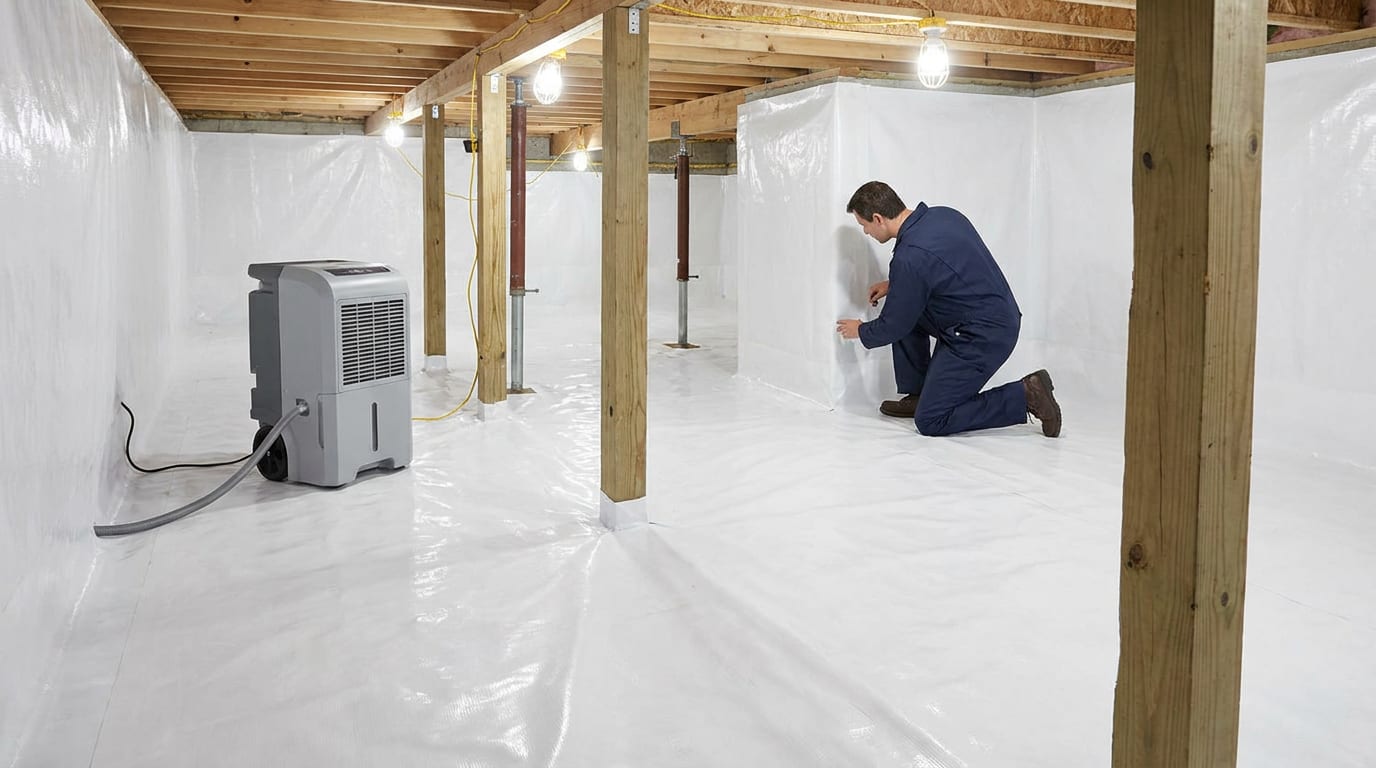
A dehumidifier dries the air that reaches it. In a long crawl space with piers and ductwork breaking it up, air at the far end may never get to the unit. Place it centrally, raised off the ground on blocks or hung from the joists so it is not sitting in any water, and use ducting or a small fan to move air from dead ends toward it.
Where the crawl space is sealed and the encapsulation was done to current practice, there is often a small supply of conditioned air from the house system as well. That helps, but it does not replace the dehumidifier, because house air in July is not dry either.
Why a household unit is the wrong tool
Portable dehumidifiers from a hardware store are designed for a living room. They have small coils, no way to drain by pump, a bucket that fills in a day, and no tolerance for the dust, cold and constant running of a crawl space. Most fail within a couple of seasons, and they use more electricity per pint of water removed than a purpose-built unit.
Crawl space and basement dehumidifiers are built for continuous duty, drain by gravity or pump, restart themselves after a power cut, and handle the lower temperatures under a house in winter without icing up. The higher price is the difference between a unit that runs for years and one that is quietly not running.