· by Michael Blair, Nashville's Crawl Space Repair
The smell is familiar to anyone who has lived in an older Nashville house: earthy, damp, strongest in the morning or after rain, worst in the closets and the rooms over the far corner of the house. Cleaning does not touch it. Candles cover it for an hour. It is the smell of the crawl space, and it is upstairs because the house is pulling it there. Understanding the mechanism is what makes the fix obvious, and it is why the fix is never on the first floor.
How crawl space air gets into the house
Warm air rises and leaves the house through the upper floors, the attic hatch, recessed lights and every gap at the top. That air has to be replaced, and the replacement comes in at the bottom, through the floor. Every gap around a plumbing pipe, every unsealed duct boot, the gaps at the sill plate and the seams in the subfloor pull crawl space air upward. This is the stack effect, and in a two-story house in winter it is strong.
The ductwork makes it worse. Return ducts that run through the crawl space leak, and a leaky return pulls crawl space air straight into the air handler and delivers it to every room. If the smell is strongest when the system runs, the ducts are the path.
What the smell actually is
Musty is the smell of microbial growth on damp organic material: mold on the joists and the subfloor, mildew on stored cardboard, fungal activity in the soil itself. A vented crawl space in a Nashville summer runs at humidity levels that support all of it, because the warm, wet outside air coming through the vents condenses on the cooler wood and ducts under the house.
It is also the smell of whatever else is down there: a dead animal, standing water, a sewage leak, rodent activity. A sharp or sewer-like note in the smell is a different problem from ordinary mustiness and needs the crawl space looked at directly.
- Worse after rain or in humid weather: moisture and mold
- Worse when the HVAC runs: return duct leaks
- Sharp, sweet or sewage note: a leak, a pest or an animal
- Strongest in closets and low cabinets: floor gaps and the stack effect
What does not fix it
Air fresheners and plug-ins cover the smell and add their own. An air purifier on the first floor cleans the air after it has already been pulled up. Opening more crawl space vents makes it worse in summer, since the outside air is the source of the moisture. Spraying the joists with a mold treatment without changing the humidity gives a few months.
Sealing the floor from above helps a little and is not practical across a whole house; the gaps are under cabinets, behind trim and inside walls. The place to stop crawl space air is the crawl space.
What does
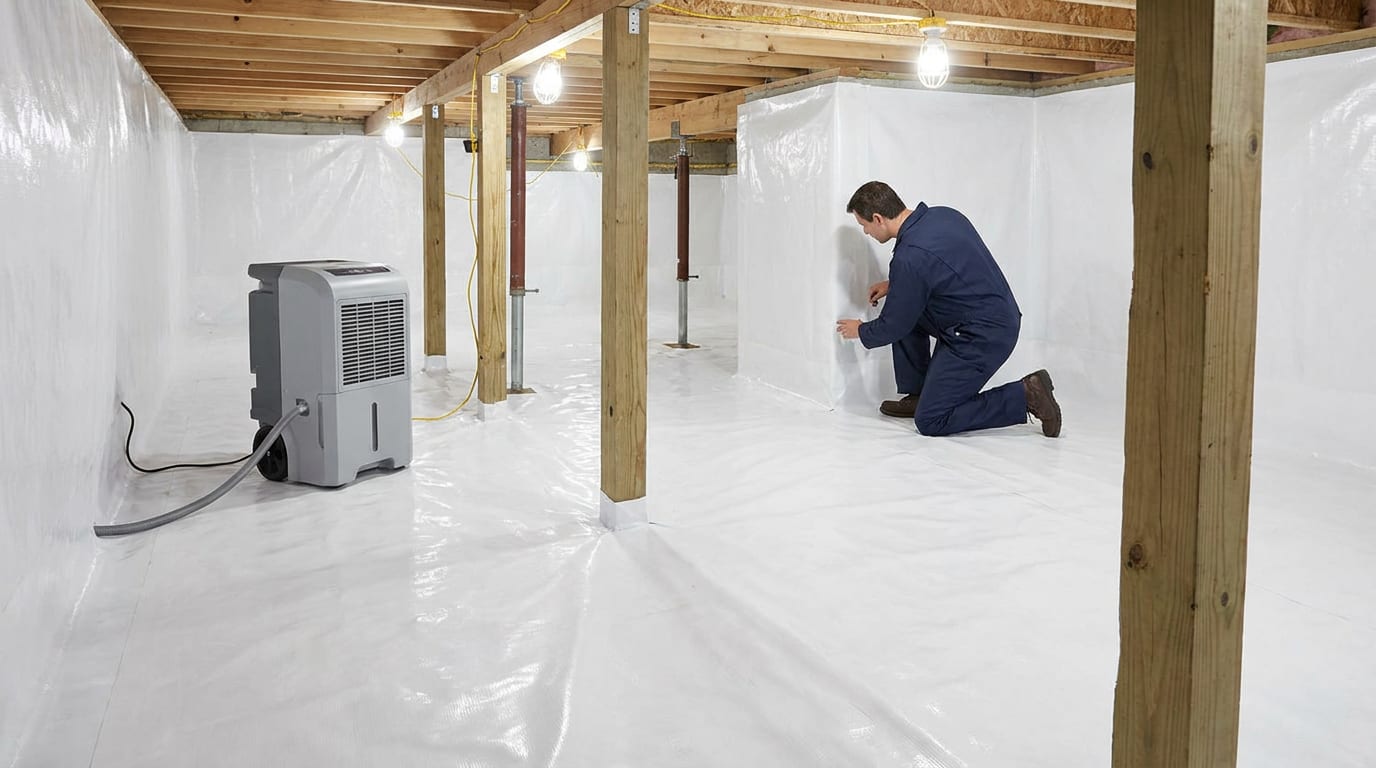
Dry the crawl space and the smell goes. That means controlling the water first: downspouts and grading, a drain and sump if water stands, and a vapor barrier over the soil. Then control the air: encapsulation seals the vents and walls, and a dehumidifier holds the space at a humidity where mold cannot grow. The existing mold on the wood is cleaned once and does not come back.
Seal the duct returns while the crawl space is being worked on, and seal the larger floor penetrations from below where they are reachable. Once the crawl space is dry and closed, the air the house pulls up is dry and clean, and the first-floor smell disappears within days of the humidity coming down.