
· by Michael Blair, Nashville's Crawl Space Repair
An encapsulated crawl space with a dehumidifier keeping the air under 60 percent relative humidity, the ceiling EPA’s brief guide to mold, moisture and your home sets for indoor air, can hold a few things. A vented crawl in summer is another matter. The Department of Energy’s crawlspace insulation fact sheet says warm, moist air pulled in through foundation vents often cannot dry the space and can raise its moisture instead, until the framing stays damp and mold grows. Whatever you store down there sits in that same air.
What a vented crawl does to stored items
Paper, fabric and cardboard soak up water, and that is what mold needs. EPA’s mold guide illustrates the point with a suitcase that grew mold in a humid basement, and warns that absorbent or porous materials may have to be thrown away once they are moldy. A crawl space is a bigger moisture source than most people expect: EPA’s moisture control guidance for buildings calls crawl spaces and basements holes in the ground, with more contact with soil than a slab, and says a damp one may add as much water vapor to the air in a day as all the other sources inside combined.
Cardboard has a second problem. University of Kentucky Entomology’s fact sheet on protecting a home against termites puts cardboard boxes and newspapers on its list of materials that attract termites and give them food, and tells homeowners never to keep firewood or wood debris inside a crawl space. Termites are not choosy about paper either; UK’s termite answers for homeowners says they damage paper, books and insulation as well as wood. What else turns up under houses here is in our post on what lives in a Nashville crawl space.
How should things be stored in an encapsulated crawl?
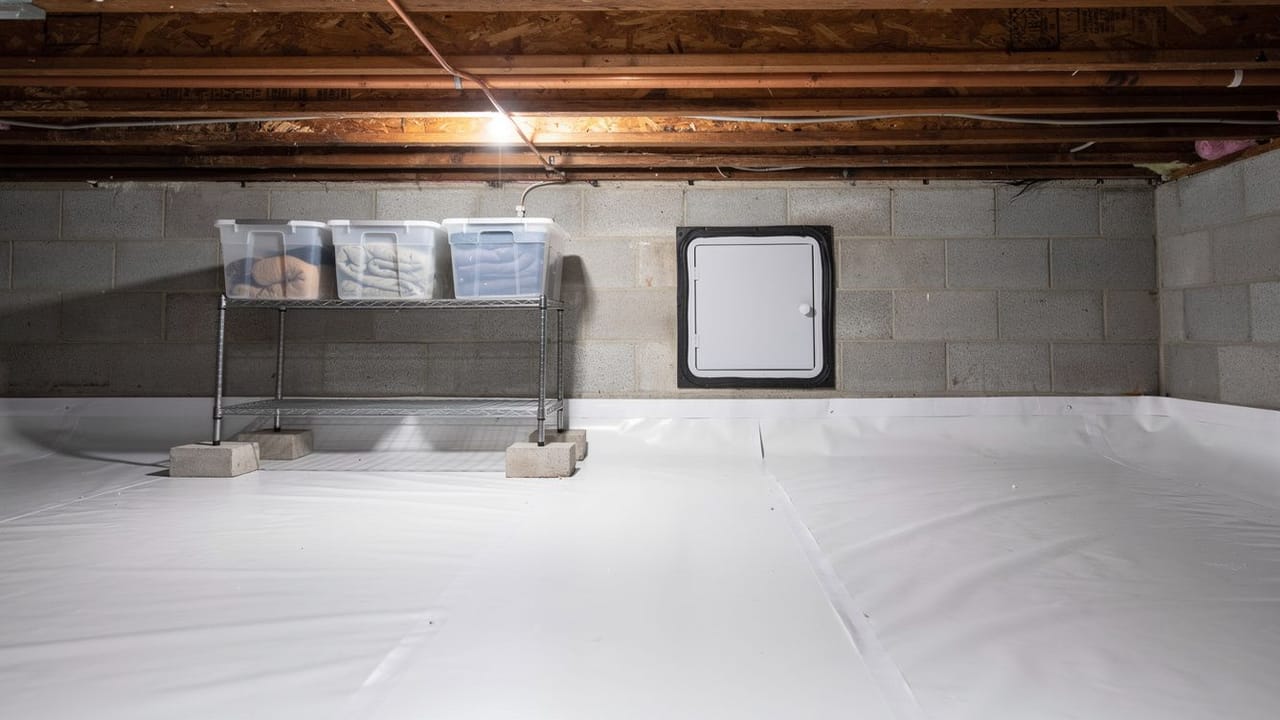
Once the ground is lined, the vents are sealed and a dehumidifier is holding the air below 60 percent, closer to the 30 to 50 percent EPA calls ideal if it can, sealed plastic bins on raised shelving are what we suggest for anything that has to go down there. DOE’s fact sheet tells builders to close crawl space vents only after making sure the space is dry, and that order is how we run an encapsulation. How we set the unit itself is covered in our post on running a crawl space dehumidifier.
Keep everything off the liner. That is our rule, not a code requirement. The sheet DOE describes is 6-mil polyethylene, its seams overlapped and taped by 12 inches and sealed 6 inches up the walls, and we would rather nobody dragged a loaded bin across it. Shelving on pavers also keeps the floor open, so a leak is easy to see and air can reach the dehumidifier.
- Sealed plastic bins, never cardboard
- Raised off the liner on shelving or pallets
- No firewood, lumber or stacks of paper
- Leave access to plumbing, ducts, the sump and the dehumidifier
- Keep a clear path to the access point
The access door
A door that does not fit leaves a gap in the air barrier and an opening for rodents and pests. DOE is specific here: in a sealed crawl, the access belongs inside the house through the subfloor unless an airtight, insulated door in the perimeter wall is built and maintained, one that stays airtight after repeated use, and the sheet lists rodents, pests and water among the things that can damage wall insulation down there. We fit an insulated, gasketed door that latches shut, with a lock if the owner wants one.
Interior hatches matter most in a house insulated at the floor. For that method DOE says to seal every air leak between the living space and the crawl space, so a loose hatch in that floor is one of the leaks. Over a sealed crawl the same sheet calls air sealing between house and crawl less critical, though we still gasket a hatch so it closes tight. If the floor or rim joist insulation needs redoing while we are there, that is our insulation and air sealing work.
What should never be stored in a crawl space?
Paint, solvents, fuel and anything with fumes. EPA’s page on volatile organic compounds lists stored fuels, paints and solvents among household sources and says gases can leak even from closed containers, so the materials you keep should sit somewhere well ventilated. A sealed crawl is built not to be. Air in a house also tends to move up from the bottom, especially in cold weather: EPA’s moisture guidance describes warm air rising through a building and pulling outdoor air in at its base, and the crawl space is the base. EPA’s Care for Your Air guide adds that these products release VOCs while stored, and that a stored product should be closed tightly.
Anything you need often, too, since fetching it means a crawl every time. And nothing that blocks the sump, the dehumidifier or the plumbing, which all need servicing. Termite work needs the same room: UK’s homeowner answers note that some companies offer no warranty when an inaccessible crawl space makes treatment to industry standards impossible. If yours is still damp and you want it dry enough to use, ask us for a free estimate.
Sources
- US EPA, A Brief Guide to Mold, Moisture and Your Home — Indoor relative humidity below 60 percent, ideally 30 to 50; mold on a suitcase stored in a humid basement; porous materials may have to be thrown away
- US Department of Energy, Crawlspace Insulation technology fact sheet (DOE/GO2000-0774, 2000) — Summer vent air can raise crawl moisture; close vents once dry; 6-mil polyethylene taped and sealed up the walls; airtight, insulated access door; rodents and pests damage insulation; air sealing less critical over a sealed crawl
- US EPA, Moisture Control Guidance for Building Design, Construction and Maintenance (2013) — Crawl spaces are holes in the ground; a damp one may add as much water vapor as all other internal sources; stack effect pulls air in at the base
- University of Kentucky Entomology, ENTFACT-605 Protecting Your Home Against Termites — Cardboard boxes and newspapers attract termites; never store firewood or wood debris inside crawlspaces
- University of Kentucky Entomology, ENTFACT-604 Termite Control: Answers for Homeowners — Termites damage paper, books and insulation; inaccessible crawl spaces can void a treatment warranty
- US EPA, Volatile Organic Compounds’ Impact on Indoor Air Quality — Stored fuels, paints and solvents are VOC sources; gases leak even from closed containers; store kept materials in a well-ventilated area
- US EPA, Care for Your Air: A Guide to Indoor Air Quality — VOCs released while products are stored; close stored products tightly
FAQ
Using a Crawl Space for Storage — questions
Can I store boxes in an encapsulated crawl space?
Use sealed plastic bins rather than cardboard, even in a dry encapsulated crawl. Cardboard is porous, and EPA warns that porous materials may have to be thrown away once mold gets into them. University of Kentucky entomologists also list cardboard boxes among the materials that attract termites and feed them. Bins on raised shelving keep everything off the vapor barrier and leave the floor open to see.
Should the crawl space door be insulated?
Yes, in an encapsulated crawl, because the space now sits inside the thermal boundary of the house. The Department of Energy calls for an airtight, insulated door wherever the access is in the perimeter wall rather than through the floor, and for one that stays airtight after repeated use. A door that does not fit leaves a gap in the air barrier and a way in for rodents and pests.
Is it safe to store paint or fuel down there?
We would not. EPA lists stored fuels, paints and solvents as sources of volatile organic compounds and notes that gases can leak even from closed containers. Air in a house often moves upward from the bottom, especially in cold weather, so fumes in the crawl can reach the rooms above. EPA advises keeping such products tightly closed in a well-ventilated place, however dry the crawl space is.
How do I turn a crawl space into storage?
Dry it first: line the ground, seal the vents and run a dehumidifier that holds the air under 60 percent. Then add raised shelving or pallets so bins never sit on the liner, keep a clear path to the access door, and leave the sump, plumbing and ducts reachable for service and for termite work.