
· by Michael Blair, Nashville's Crawl Space Repair
Crawl space moisture in Middle Tennessee is usually blamed on humid outdoor air, and most of the time that is fair. But one of the most common things found under older houses is a moisture source the house supplies itself: a dryer duct that fell off or was simply run into the crawl, a bathroom fan ducted down through the floor, an air conditioner drain line that ends on the dirt. Each one delivers water under the house every day it is used, and no vent strategy or dehumidifier keeps up with it. Finding them takes a flashlight and a slow crawl.
The dryer duct
A clothes dryer works by turning the water in a load of wet laundry into warm, humid air and blowing it out through the duct. If that duct ends in the crawl space, or has pulled loose from a joint somewhere along its run, every load puts that water under the floor. The telltale signs are gray lint caked on insulation and joists near the laundry room, a patch of floor framing darker or moldier than the rest, and a crawl that smells worse on laundry day.
Lint is also combustible, and a dryer duct packed with it, or a pile of it on the insulation beside the dryer, is a genuine fire hazard. The fix is a rigid or semi-rigid metal duct run as directly as possible to the outside through the rim joist or wall, ending in a proper exterior hood with a flap, and kept within the length the dryer’s manufacturer allows.
Bathroom fans and kitchen hoods
A bathroom exhaust fan exists to remove shower moisture from the house. Plenty of them, especially in bathrooms added or remodeled without a permit, move that moisture a few feet: into the attic, or down through the floor into the crawl. The duct may end in the insulation between joists, where it keeps that section of subfloor damp every time someone showers.
Kitchen range hoods occasionally get the same treatment, and they add grease to the water. The residential code requires dryers, bath fans and range hoods that exhaust to terminate outside the building, and Metro Codes or the county inspector checks that on permitted work. Unpermitted work is where the shortcuts are found.
Drain lines and discharge pipes
Air conditioners pull water out of the air, and in a Tennessee summer an evaporator coil drains steadily for hours a day. If the furnace or air handler sits in the crawl, or its drain line passes through it, check where that line ends. A condensate line that drips onto the soil next to the unit waters the crawl all summer, exactly when the space is already at its dampest.
The water heater’s relief valve discharge, a dehumidifier’s own drain and a slowly leaking drain joint under a tub belong on the same list. Walk the whole crawl with a flashlight and look at the end of every pipe and duct you can find.
- Dryer duct: connected at every joint, ending outside through a hooded cap
- Bath fans: ducted to a roof or wall cap, not into the floor or the insulation
- Range hood: exhausting outside, or recirculating inside the kitchen by design
- AC condensate: to a drain or a pump that carries it outside, away from the foundation
- Water heater relief line: running to an approved discharge point
Fix these before anything else
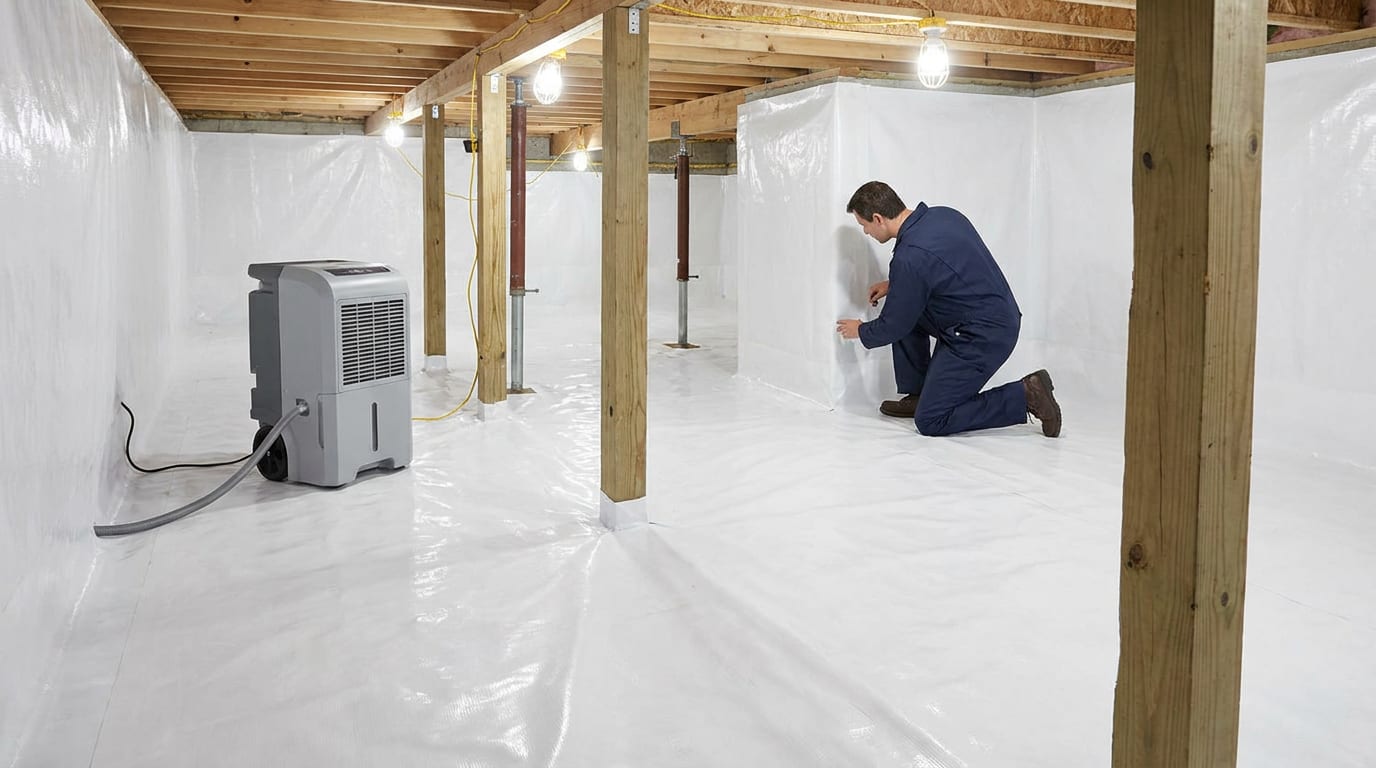
These sources have to be corrected before a crawl space is encapsulated. Sealing a crawl that still receives a dryer’s exhaust traps that water inside with nowhere to go, and a dehumidifier sized for the ground and the air will lose to a daily load of laundry. The rerouting itself is usually a small job compared with everything else under the house.
When we inspect a crawl, the ends of the ducts and drain lines are part of the walk-through, and they often explain why one corner is so much wetter than the rest. Moving a duct a few feet outside is one of the least expensive moisture repairs a house can get, and it is worth doing whether or not anything else under the floor changes.