
· by Michael Blair, Nashville's Crawl Space Repair
The instinct is that vents dry a crawl space out. On a muggy Middle Tennessee summer day they can do the opposite, and understanding why explains a lot of what goes wrong under houses here.
The condensation problem
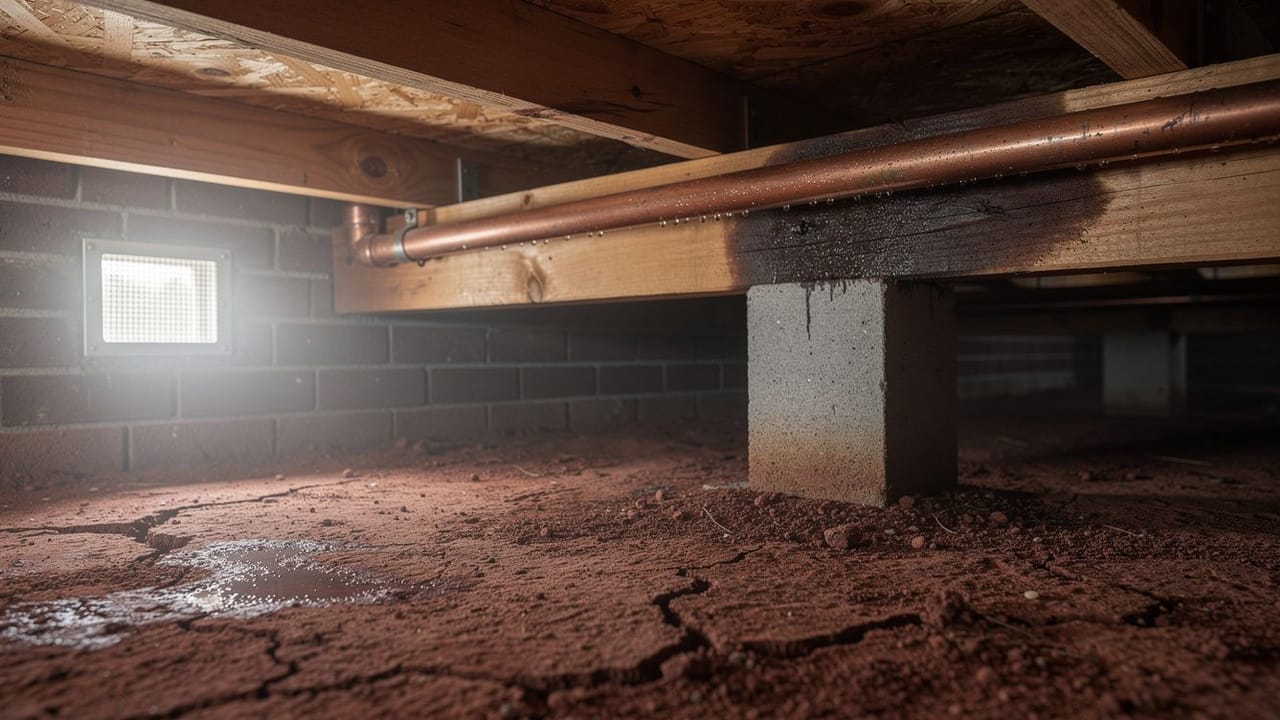
Summer air here is warm and humid, and a crawl space sits in the ground. EPA’s moisture control guidance for buildings points out that crawl spaces have more extensive contact with soil than a slab does, and that water can condense on foundation materials in warm weather because they are cooler than the outdoor air.
So the water ends up on the pipes and the underside of the floor. EPA’s mold course puts the mechanism in one line: when warm, humid air contacts a cold surface, condensation may form. The same EPA guidance relies on ventilation to keep crawl space humidity down only when the outdoor dew point is below 55°F. When it is higher than that, open vents can let in more moisture than they carry away.
What it damages
The ground adds its own share. The Forest Products Laboratory’s Wood Handbook names soil moisture as the primary source of condensation under a house and warns that wetting floor framing and sheathing this way can cause serious decay damage. It says decay generally needs wood at fiber saturation, usually about 30 percent moisture content, and that 20 percent is sometimes used in field inspections as the maximum allowable level to keep a margin of safety. Moisture above 20 percent, the handbook adds, encourages corrosion of steel fasteners, and termite hazard is greatest under houses built over a crawl space that is poorly drained and has no moisture barrier.
The Building America Solution Center’s guide to capillary breaks at crawlspace floors lists mold and rot on the floor joists and rim joists among the harm that crawl space moisture does to a home. None of that is visible from the living room, which is why a crawl space inspection starts with getting under the house. The moisture also travels up. EPA’s mold course says it can pass from a crawl space into other parts of the building, and by its moisture guidance, one damp crawl space can release as much water vapor in a day as every other moisture source in the home put together. The smell that often comes with it has a post of its own.
- Condensation on pipes and the underside of the floor
- Mold and rot on the joists and the rim joist
- Corrosion of nails and other steel fasteners in wet wood
- Higher termite risk in a poorly drained crawl with no moisture barrier
- More water vapor in the rooms above
What does encapsulating a crawl space mean?
Encapsulation means blocking off and sealing the vents, covering the whole floor with polyethylene sheeting, carrying it up the walls and piers, and keeping the humidity in the space under control. The Solution Center’s guide to water management of an existing crawlspace floor calls for sealing the vents with durable, waterproof materials and laying 6-mil or thicker sheeting over the entire floor. The capillary break guide runs the sheeting at least 6 inches up walls and piers, with seams lapped 6 to 12 inches and sealed. On our jobs the rim joist gets sealed as well, which is part of our insulation and air sealing work.
It is one accepted design, though not the only one. EPA’s guidance says crawl spaces may be vented to the outdoors or air sealed, and the capillary break guide says the plastic ground cover should go in either way. What sealing the crawl changes is where the moisture comes from: the soil is covered and the summer air is kept out, instead of the space being aired out and hoping for a dry week.
In what order should a wet crawl be fixed?
Bulk water first. The water management guide starts with keeping it out, by grading the soil away from the house, running footing drains to daylight and putting a sump pump in low spots, and EPA’s guidance likewise has the surrounding slope divert water away from the building. A barrier laid over standing water only covers it up, so drainage and sump work comes before any plastic goes down.
Then the barrier, then the sealing, then humidity control. EPA’s target for a crawl space is under 65 percent relative humidity, with a dehumidifier where it is needed, and the water management guide recommends tracking the crawl’s temperature and humidity after the work, ideally for a year. EPA’s brief guide to mold and moisture notes that a low-cost humidity meter is enough to take those readings. How we set up and run the machine itself is in our dehumidifier post, and if there is already water on the ground under your house, ask us for an estimate.
Sources
- U.S. EPA, Moisture Control Guidance for Building Design, Construction and Maintenance (EPA 402-F-13053, 2013) — Crawl spaces in contact with soil; condensation on cooler foundation materials; ventilation only below a 55°F outdoor dew point; under 65 percent RH with dehumidifiers; vented or air sealed; slope to divert water; damp crawl adds as much vapor as all other sources
- U.S. EPA, Mold Course Chapter 2: Mold and Moisture — Warm humid air condenses on cold surfaces; moisture passes from a crawl space into the building; indoor RH below 60 percent
- USDA Forest Service, Forest Products Laboratory, Wood Handbook: Wood as an Engineering Material (FPL-GTR-282, 2021) — Soil moisture the primary source of condensation; decay of floor framing; about 30 percent for decay, 20 percent inspection limit; fastener corrosion above 20 percent; termite hazard over poorly drained crawl spaces
- DOE Building America Solution Center, Water Management of Existing Crawlspace Floor — Seal vents; 6-mil or thicker sheeting over the whole floor; grading, footing drains and sump pumps for bulk water; monitor temperature and RH, ideally for a year
- DOE Building America Solution Center, Capillary Break at Crawlspace Floors — Sheeting lapped at least 6 inches up walls and piers, seams lapped 6 to 12 inches and sealed; ground cover for vented or unvented crawls; mold and rot along joists and rim joists
- U.S. EPA, A Brief Guide to Mold, Moisture, and Your Home — A low-cost humidity meter measures relative humidity
FAQ
Why Your Crawl Space Is Wet in Summer — questions
Should I close my crawl space vents?
Closing them as part of a full encapsulation, with a ground barrier and humidity control, is one accepted approach, and EPA guidance treats vented and sealed crawl spaces as both valid designs. We would not close them on their own with nothing else done, because that leaves the wet soil and any standing water where they are. It is a sequence rather than a single step, and bulk water is dealt with first.
Does a crawl space affect the air in my house?
It can. EPA says moisture can pass from a crawl space into other parts of a building, and its moisture guidance ranks a damp crawl space level with all of a home’s other indoor moisture sources combined, counted in water vapor per day. How much reaches the rooms above varies from one house to the next.
How much moisture is too much in a crawl space?
For the wood, 20 percent moisture content is sometimes used in field inspections as the upper limit, which leaves a margin below the roughly 30 percent the Forest Products Laboratory gives as the level decay generally needs. For the air, EPA guidance aims for under 65 percent relative humidity in a crawl space, and below 60 percent indoors. A low-cost humidity meter answers the second question.
What causes moisture in a crawl space?
Mostly the soil and the summer air. The Wood Handbook names soil moisture as the main source of condensation under a house, and humid outdoor air coming through the vents condenses on the cooler framing, pipes and foundation. Rain that the grading sends toward the house adds bulk water on top of that.